WhatsApp Business

Overview
I joined the GrowthSchool Hackathon as part of a team. The idea was to transform WhatsApp Business App into a holistic, seamless platform for Small and Medium-sized Businesses (SMBs) in India. Also, enhancing online selling with intuitive features to streamline operations and boost efficiency.
My Role
I contributed across the full design process — from research and ideation to wireframing that improved usability and user experience — and supported my team with documentation and the final presentation.
Project Goal
Redesign WhatsApp Business features into a cohesive, seamless ecosystem that improves the selling experience and introduces enhanced features for online commerce.
Process
Journey Mapping
To uncover gaps and opportunities, we initiated the design process by mapping the user journey based on our initial understanding. These assumptions were later validated and refined through insights gathered from research.
Secondary Research
We conducted secondary research and a competitive landscape scan to surface pain points already reported by existing users. This helped us identify key gaps:
No in-app payment option
Cumbersome order management
Limited ability to reach a wider audience
Existing users are underutilising available features
Primary research
To validate these findings, we conducted primary research with six shortlisted businesses recruited through a screening survey. We intentionally selected a diverse mix of business types to understand varied usage patterns and gathered rich insights into how they interact with the app in real-world selling scenarios.
Who are our target users?
Participants were grouped into two segments: small-sized (homegrown) businesses and medium-sized (startup) business owners, enabling us to compare needs, behaviours, and operational challenges across growth stages.
Based on our research, we synthesised the findings into key user pain points:
Disorganised communication: Mixing personal and business chats leads to confusion and inefficiency.
Dependency on external tools: Businesses rely on third-party apps for inventory management, document scanning, and invoices.
Lack of trust: Customers hesitate to transact due to security concerns.
Limited reach: The app primarily depends on existing contacts, limiting customer acquisition.
To address these challenges, the team generated a wide range of solution ideas. Narrowing them down proved difficult due to individual biases toward proposed concepts. To make the decision-making process more objective, we applied the NUF (New, Useful, Feasible) framework to evaluate and prioritise ideas.
Proposed Solutions
We designed features that transformed WhatsApp Business into an all-in-one platform for SMBs:
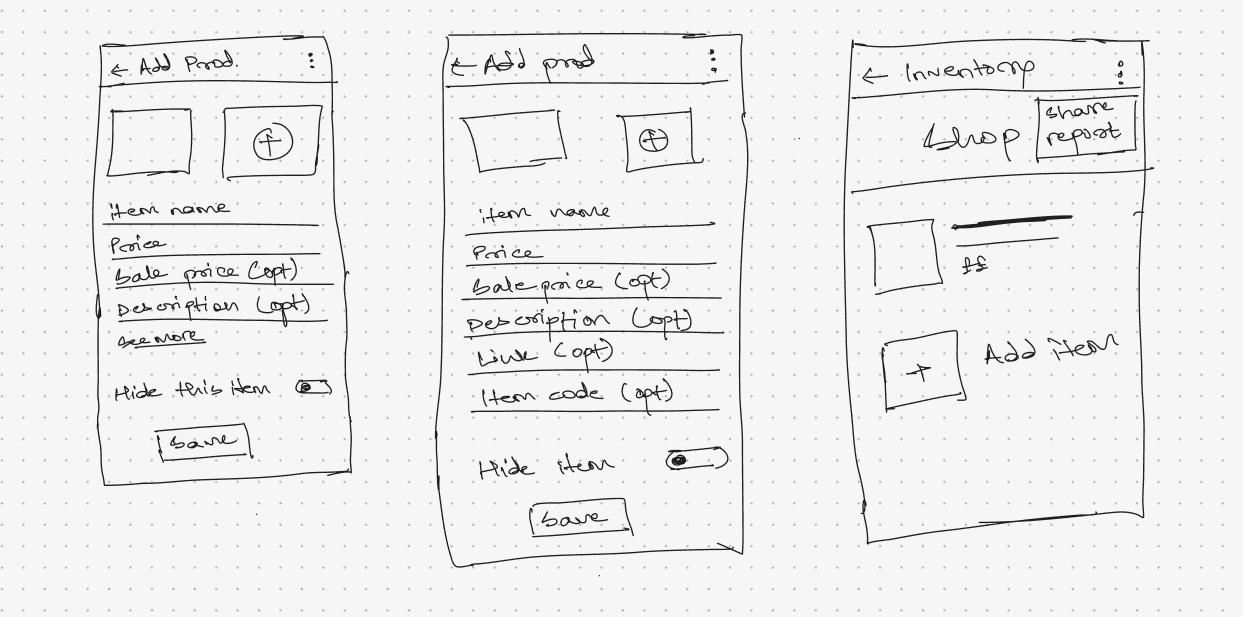
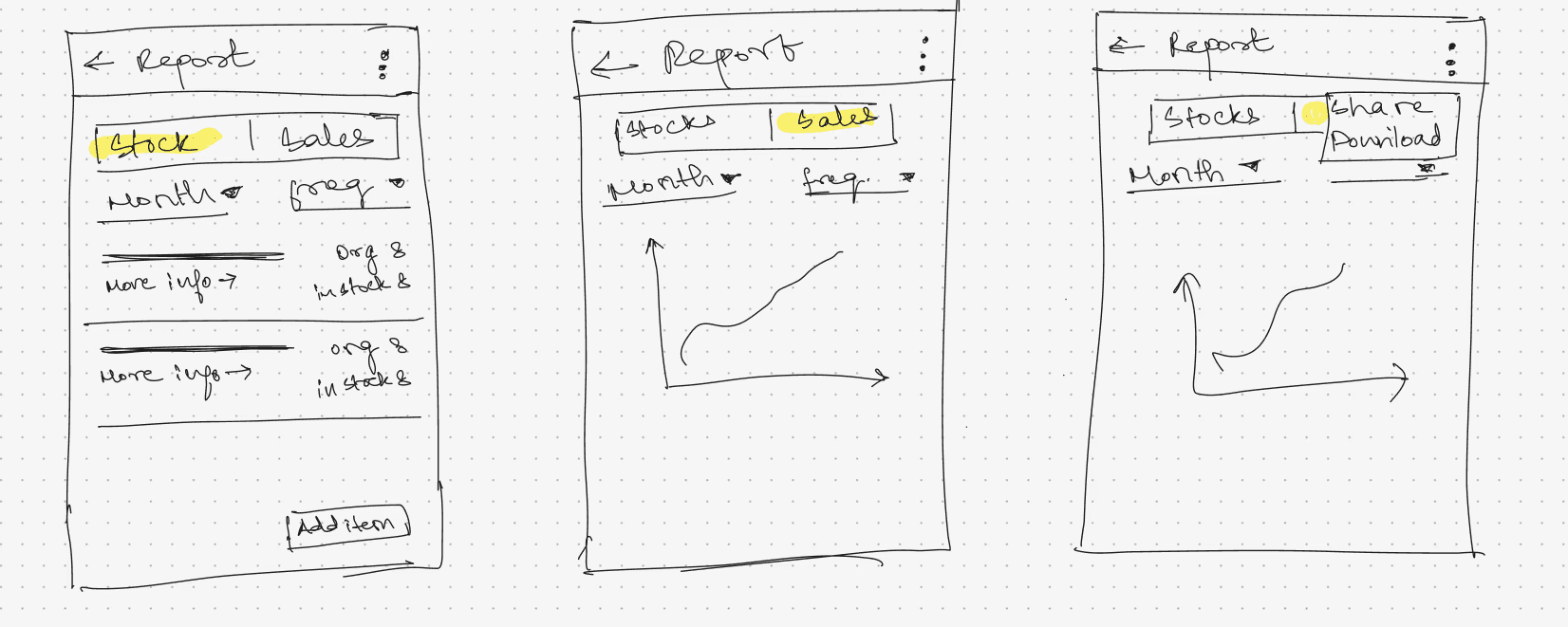
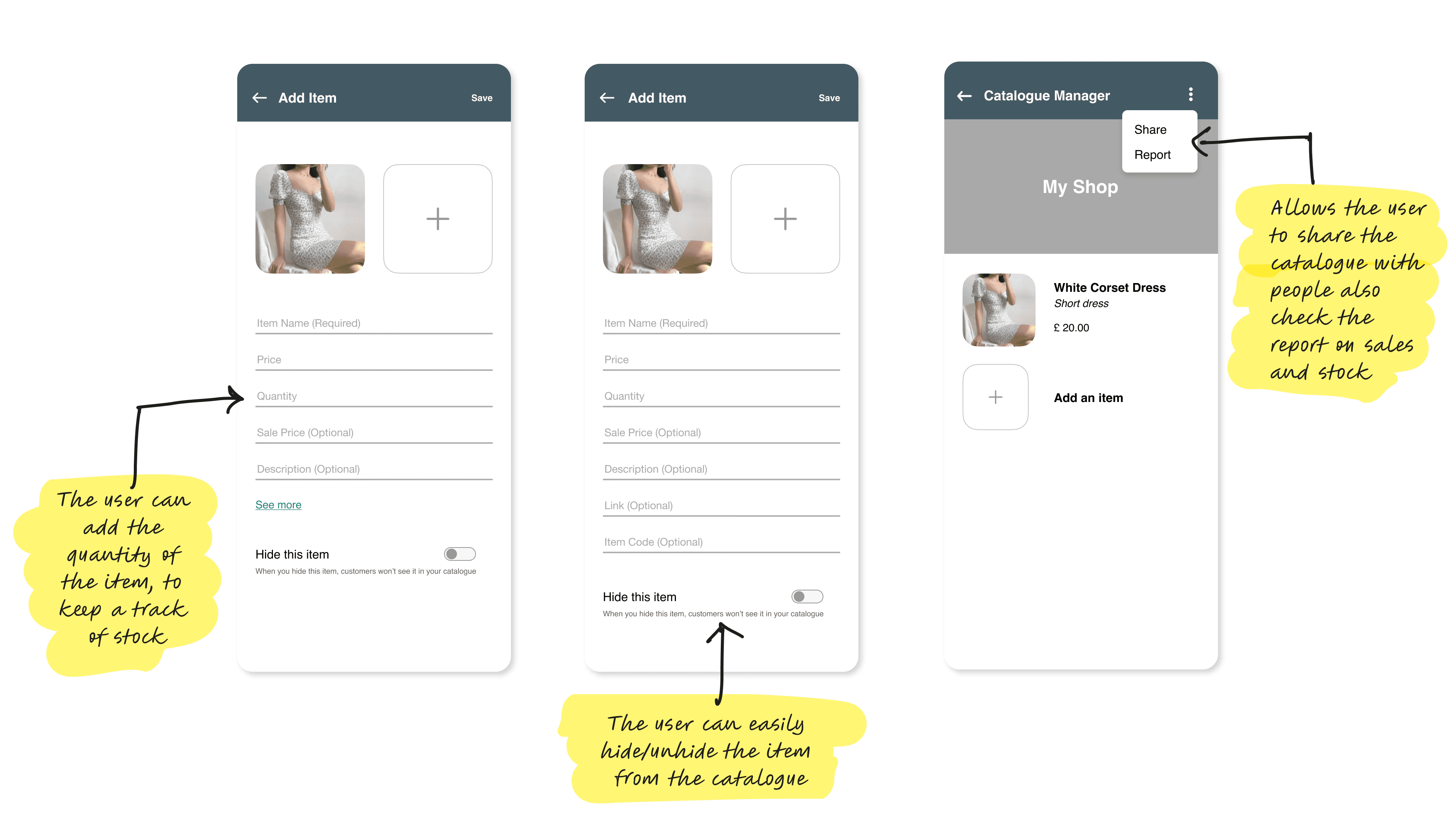
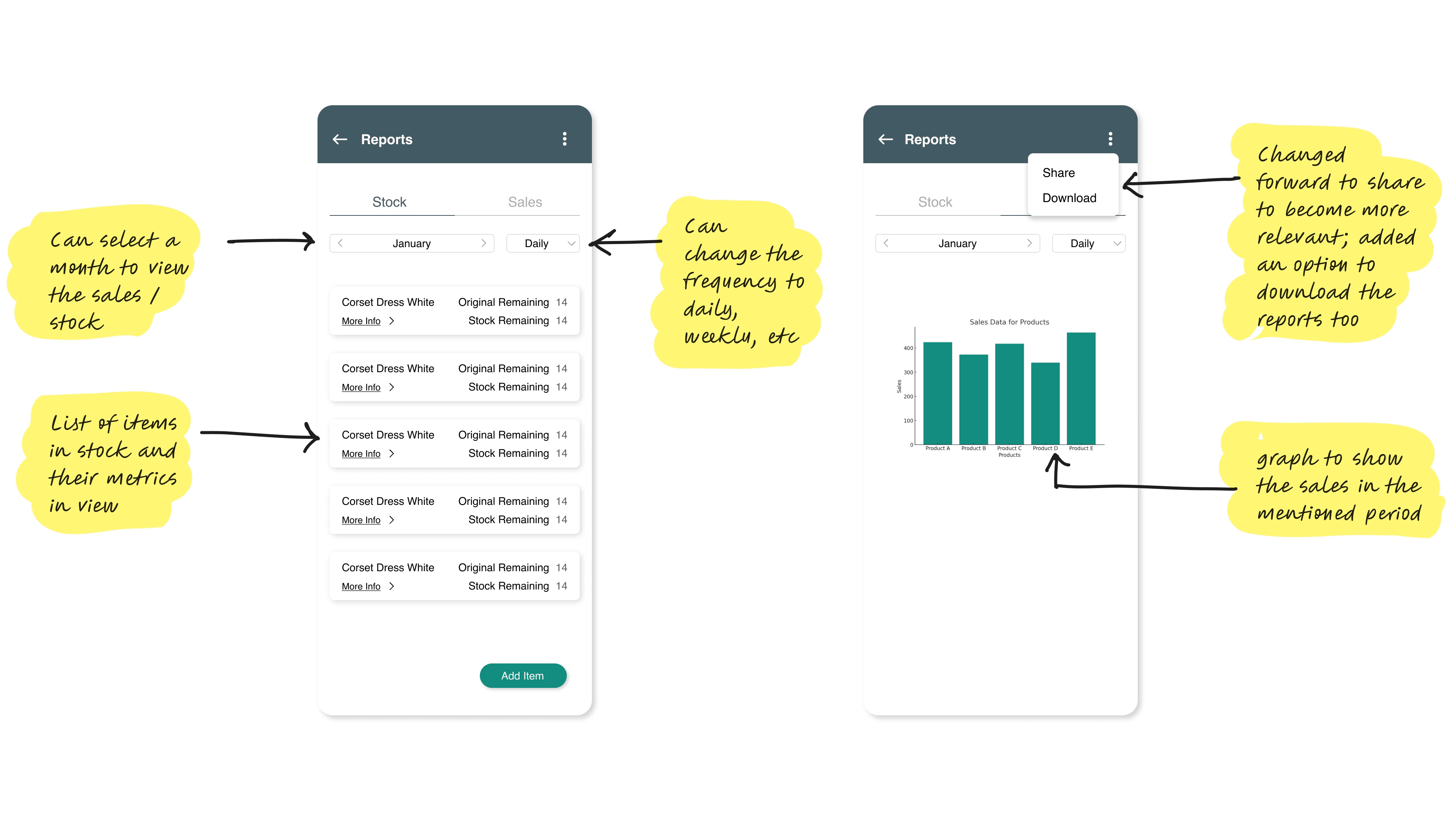
Inventory Management: Enables businesses to track stock, update inventory, and generate sales reports directly in the app.
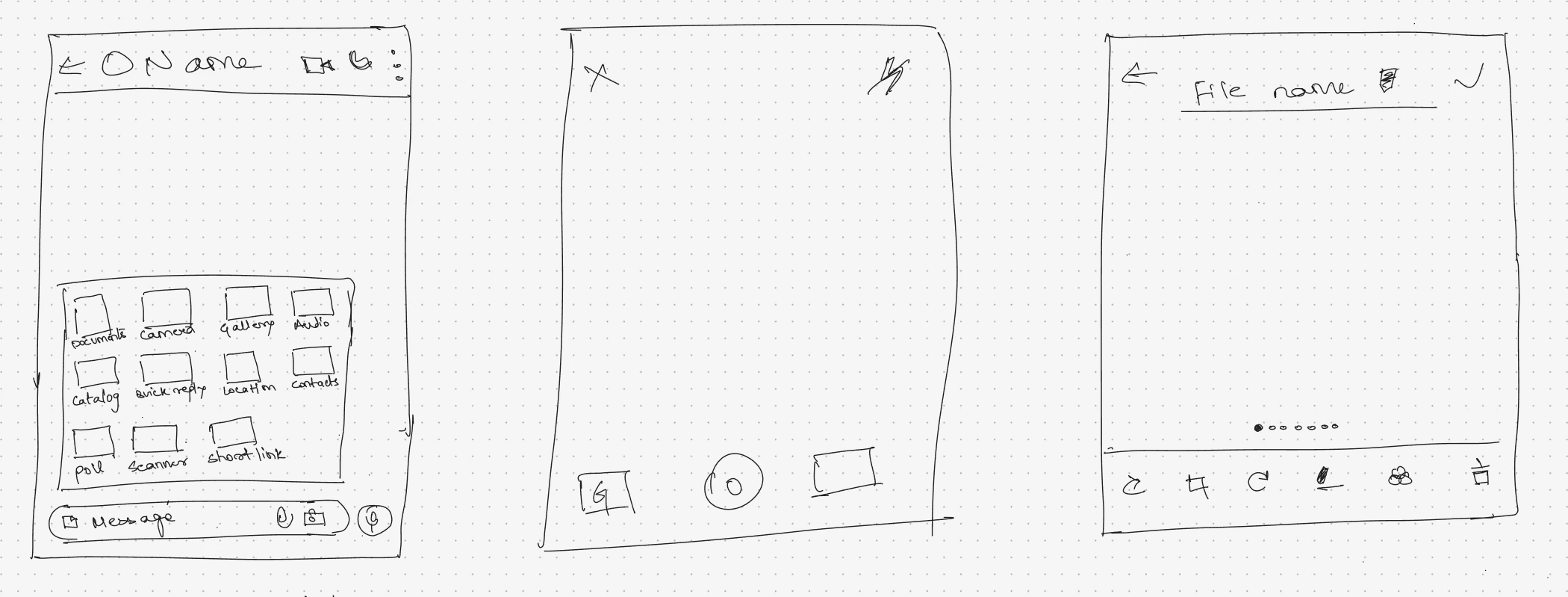
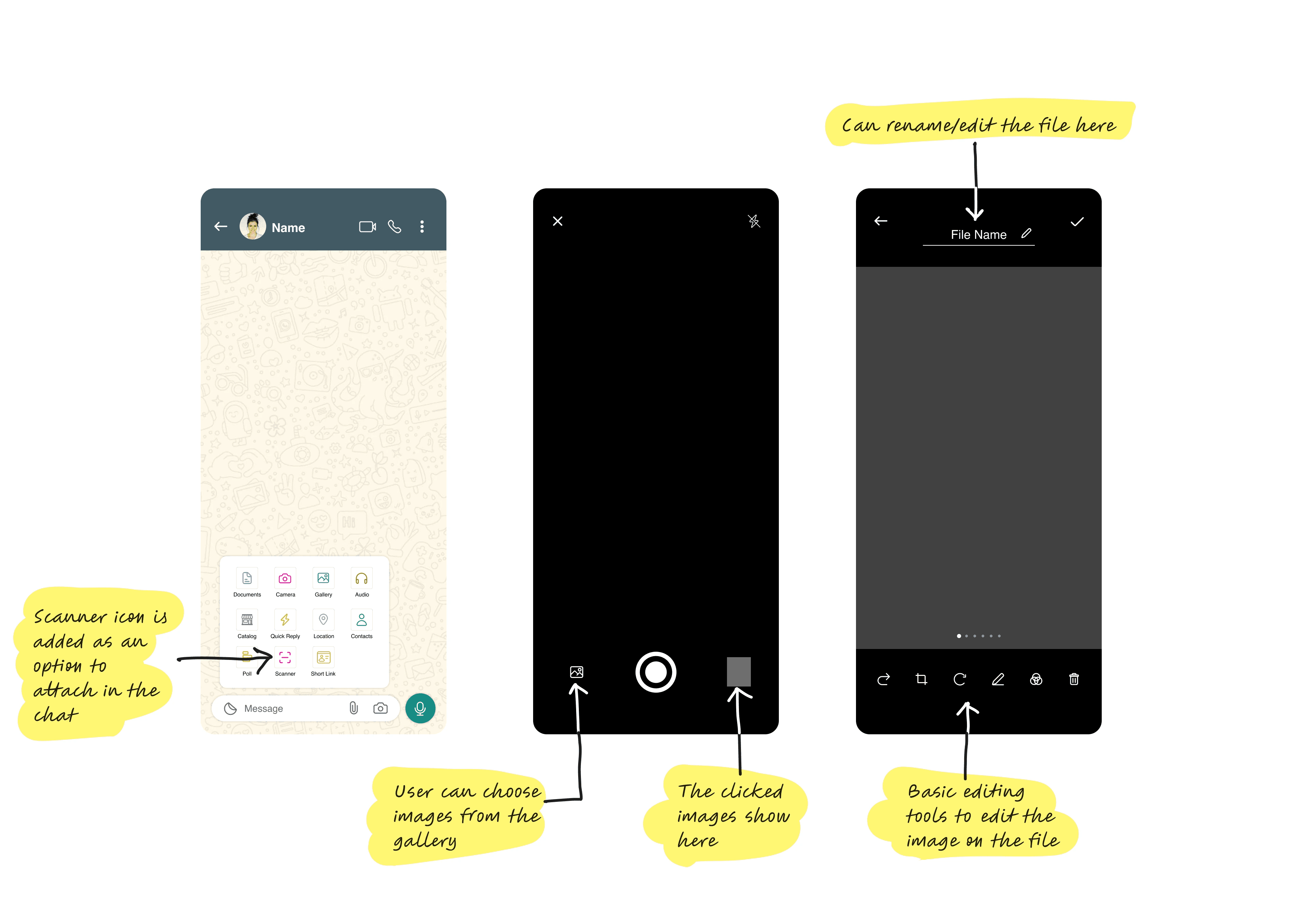
Document Scanning: Allows scanning of invoices, receipts, and contracts without external tools.
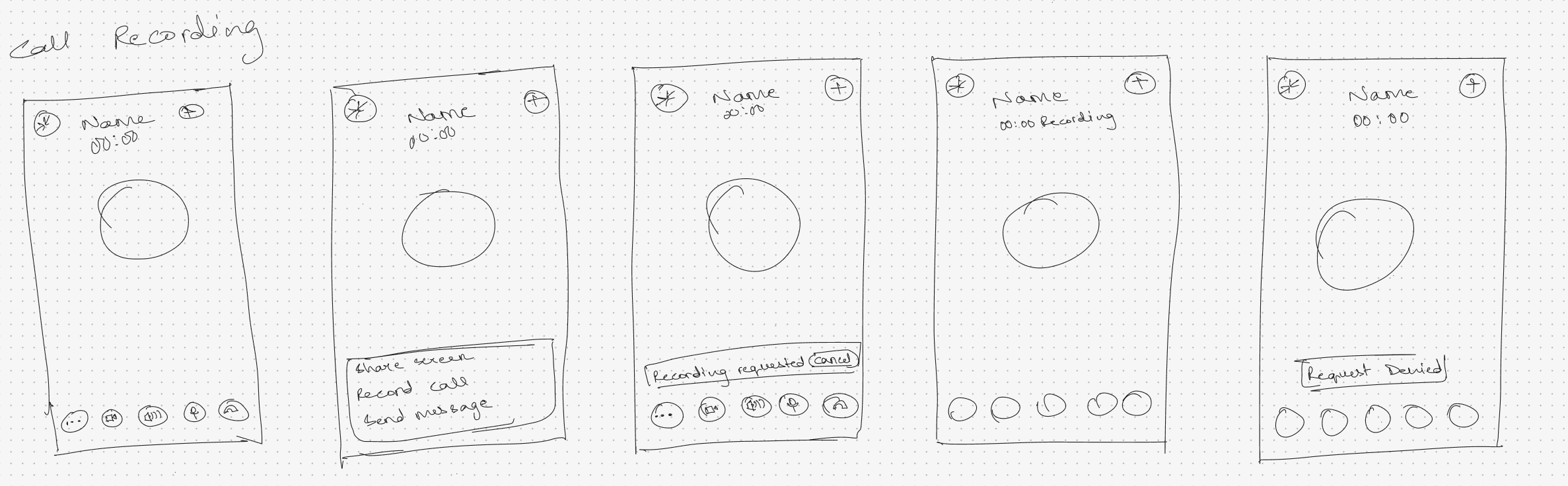
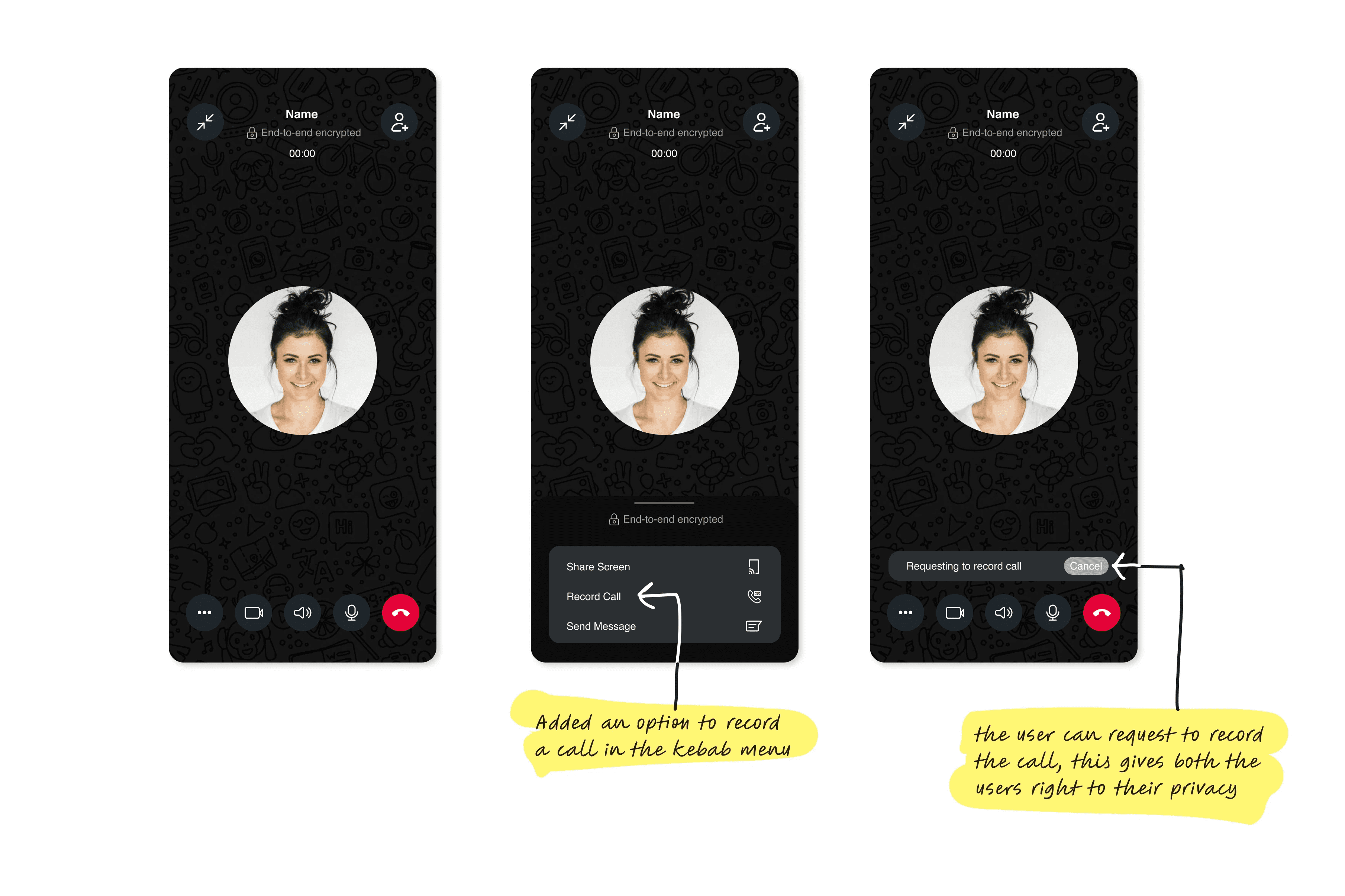
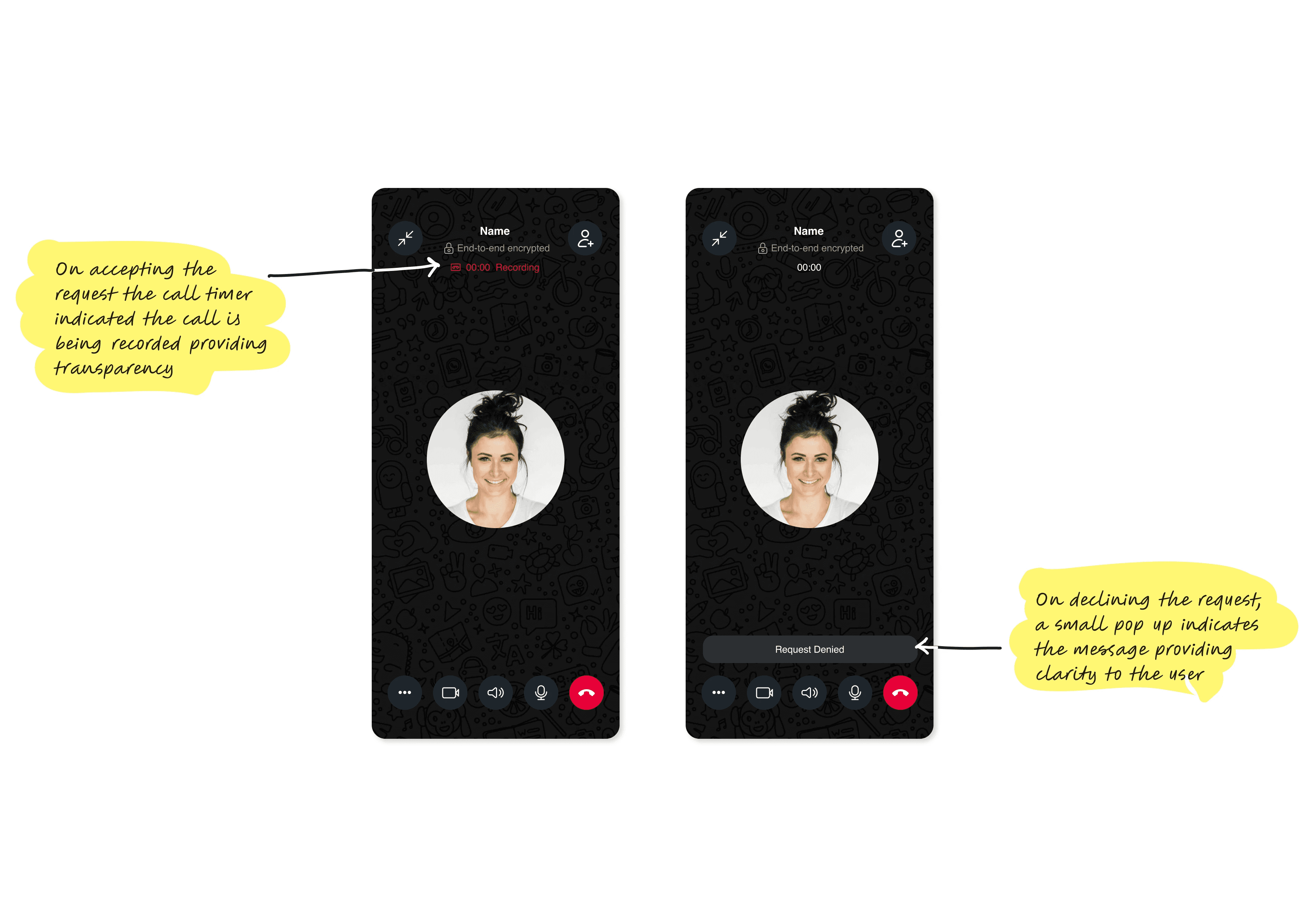
Call Recording: Provides a privacy-consented feature for recording client calls to improve service and resolve disputes.
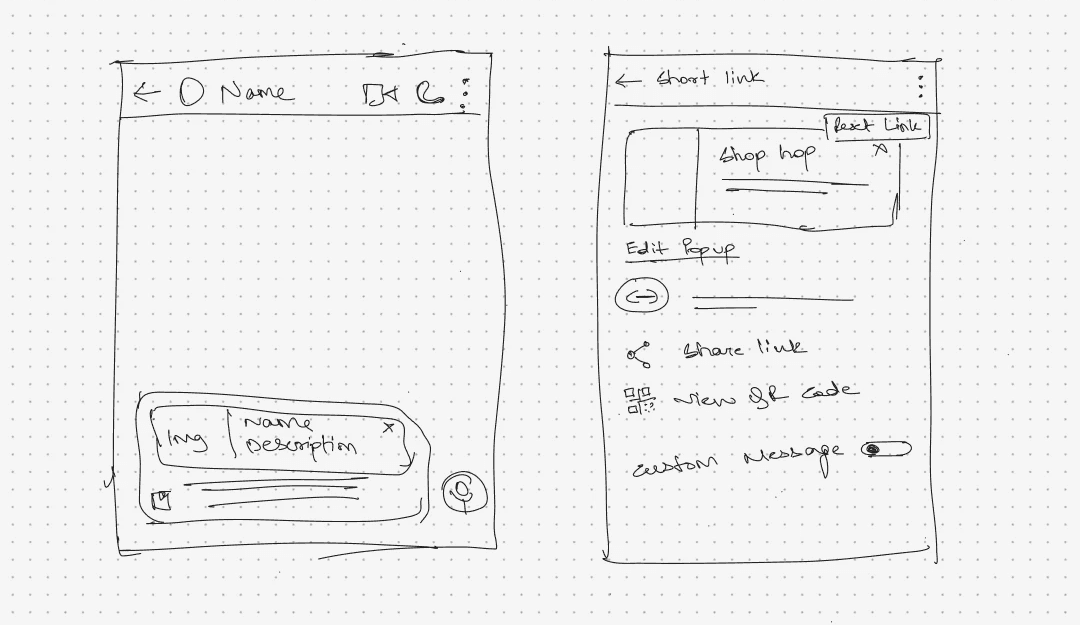
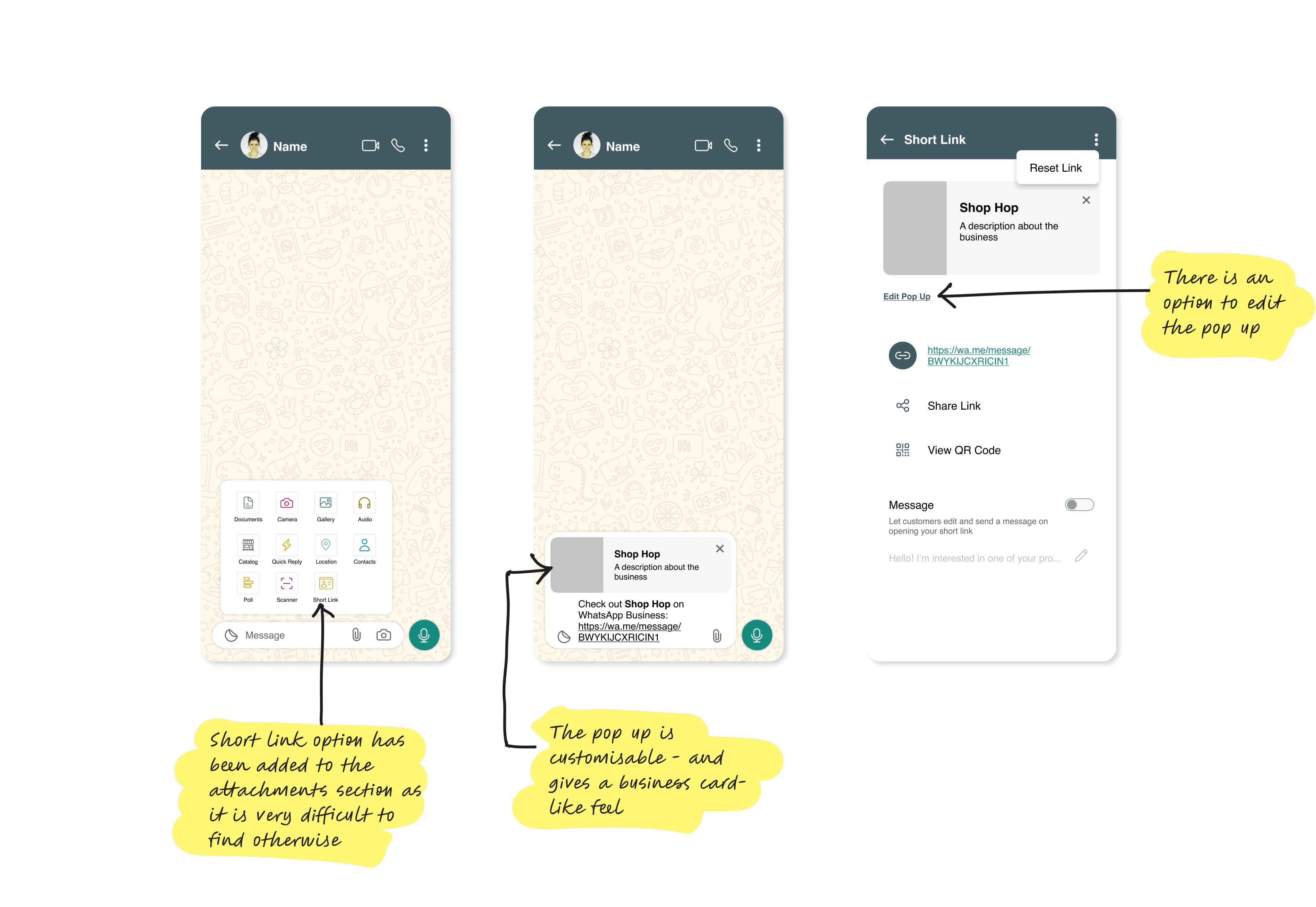
Enhanced Business Cards: Simplifies professional profile sharing with visually appealing digital cards.
Testing
After the first round of ideation, a peer review was done to understand the gaps in our designs and how clear the usability was. Key findings included:
Users appreciated the simplicity of inventory management and scanning tools.
Call-recording features need clearer consent prompts to ensure privacy compliance.
Enhanced business cards improved professionalism and ease of client communication.
After this, we edited the wireframes and proceeded to make hi-fidelity designs.
Designs
Wireframes
We sketched initial concepts to visualise workflows, focusing on simplicity and functionality.
Hi-Fidelity Designs
Developed polished screens showcasing interactive features, such as real-time stock updates, scan buttons, and call recording controls.
Outcome
Our designs directly addressed user challenges and streamlined business operations:
Improved efficiency: Integrated tools reduce dependency on external apps, saving time.
Enhanced trust: Privacy-compliant call recording and professional profiles fostered better client relationships.
Simplified workflows: Features like inventory tracking and document scanning minimised operational overhead.
These solutions demonstrated WhatsApp Business's potential as a comprehensive platform for SMBs.
Challenges
The project was not without obstacles:
Time constraints: Working within a hackathon’s limited timeframe required prioritising features.
Limited perspectives: Insights were primarily gathered from business owners, with assumptions made about customer needs.
Team expertise variance: Members had differing levels of technical proficiency, which influenced the scope of our final prototypes.
Key Takeaways
This project reinforced the importance of collaboration, iterative design, and user-centred problem-solving. By focusing on real pain points, we delivered practical solutions that balanced innovation with feasibility. It also underscored the potential of digital platforms like WhatsApp Business to empower SMBs.
Other Projects

UrbanClap
The project focused on enhancing user trust through visible safety measures, location-based reviews, and a seamless booking experience. By implementing a user-centric UX strategy, the goal was to increase engagement, improve reliability, and boost service bookings.
PlaqueQuest
It is an interactive app designed to enhance the exploration of York’s Blue Plaques through real-time navigation, augmented reality (AR), and curated historical content. It provides users with an intuitive platform to discover, learn, and engage with the city’s rich heritage in a seamless and immersive way.

My Thesis : Effects of language diversity on Financial Inclusion and DFS usability in India
The study examines how language diversity affects digital financial service (DFS) usability in India, finding that low English proficiency users face significant barriers, leading to lower usability and financial exclusion. It highlights the need for better localisation in fintech platforms to improve accessibility and inclusion.
Interested in connecting?
Let’s talk projects, collaborations, or anything design!